

Springtime, Art and Bastards
Gainsborough, AI and Sheep-Shearing Season Bring Up Issues

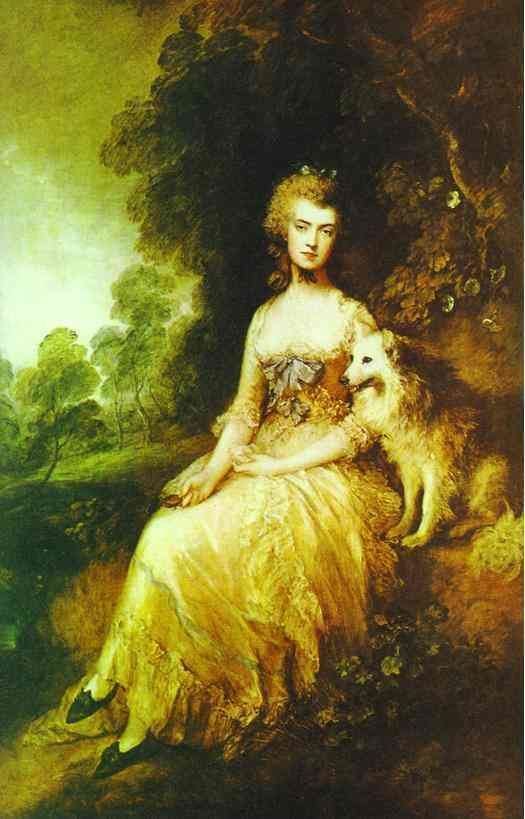
Mrs Mary Robinson ( as the character Perdita in The Winter’s Tale) by Thomas Gainsborough
This past week, I was lucky enough to go with friends to two museum exhibits here in NYC. First, Gwen Sarnoff and I went to the Frick Museum to see Gainsborough: The Fashion of Portraiture. The portrait of Mrs. Mary Robinson above is not in the collection but was similar to many of the works there. (No photographs allowed!) The life story of so many of the women depicted in the exhibit of Gainsborough’s work had a lot of heart ache. There was the rise of the young lady up through society, a dalliance/marriage/child-born-out-of-wedlock and then, a fall from grace.
Not at the Frick, is this Gainsborough portrait, Perdita, I’ve been captivated by it for some time. Eighteenth century actress Mary Robinson met the Prince of Wales while playing Perdita in David Garrick’s The Winter’s Tale at the Drury Lane Theatre when the prince was only seventeen years old, and she was twenty-two.
Later, the Prince George tried to get out of providing her with an annuity of £5,000 and paying off her debts when he moved on to another mistress, (her maid at the theatre!) but she threatened to publish her letters from the Prince. Before this fall, in her Halcyon years, she had numerous portraits of her. Some were painted by Gainsborough, and others by Joshua Reynolds.
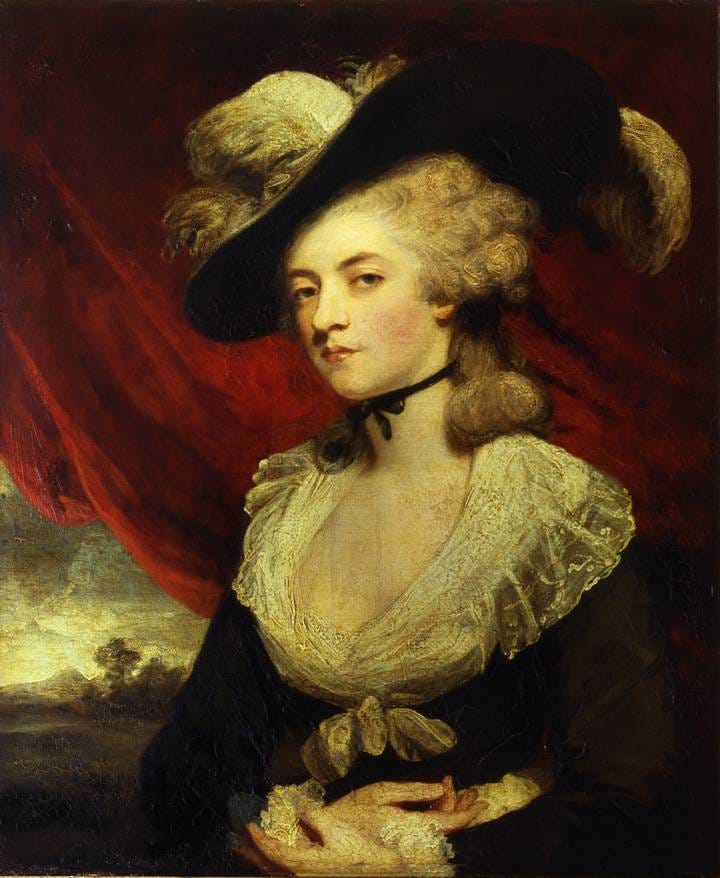
Joshua Reynolds, Mary Darby, Mrs Thomas Robinson ('Perdita'), 1782. Waddesdon Manor (2621). Waddesdon Image Library.
In 1782, after her liaison with the prince ended, Mary captured the attention of Banastre Tarleton (1754–1833), a cavalry officer from a Scottish family who were in the slave trade. Mary became pregnant with Tarteton’s illegitimate child, and had a miscarriage and partial paralysis from pursing him in a carriage as he fled to France to escape his debts. Her genius did not seem to extend to picking partners. This turn of events led to Mary Robinson’s career as a poet, dramatist, and novelist.
Was she aiming too hight? Shakespeare weighs in on “true blood” or bastard flowers “gillyvors” (carnations - thought to be cross-breed flowers) breeding with the “gentler scion” - “more pure” flowers.
In The Winters Tale, Mary’s big break show, Perdita has an exchange with Polixenes about bastard flowers, royal blood and how an undiscovered royal should refuse to let a royal (her royal boyfriend) be contaminated by a commoner. As Perdita says on the subject of royal flower being around bastard flowers: “I’ll not put the dibble in earth to set one slip of them.” Let’s see how this unfolds as Perdita objects to planting carnations because they are grafted and have spots or “piedness,” proving they are “nature’s bastards.”
PERDITA: (a princess unaware of her royal birth who is dressed as a sort of Queen of the May during a sheep-shearing festival)
Are our carnations and streak'd gillyvors,
Which some call nature's bastards: of that kind
Our rustic garden's barren; and I care not
To get slips of them.
POLIXENES
Wherefore, gentle maiden,
Do you neglect them?
PERDITA
For I have heard it said
There is an art which in their piedness shares
With great creating nature.
POLIXENES
Say there be;
Yet nature is made better by no mean
But nature makes that mean: so, over that art
Which you say adds to nature, is an art
That nature makes. You see, sweet maid, we marry
A gentler scion to the wildest stock,
And make conceive a bark of baser kind
By bud of nobler race: this is an art
Which does mend nature, change it rather, but
The art itself is nature.
PERDITA
So it is
This passage of “piedness” on mixed media of flowers brought up issues of Artifical Intelligence for me. Is AI an “art” that mends nature? Or changes it into a bastard form of art? Is the act of changing something an act of art itself? What obligations do we have to keep the shades of mixing things separate from “pure” art or species?
[…]
POLIXENES
Then make your garden rich in gillyvors,
And do not call them bastards.
PERDITA
I'll not put
The dibble in earth to set one slip of them;
No more than were I painted I would wish
This youth should say 'twere well and only therefore
Desire to breed by me.
So, Perdita digs in her heels and says that she would not plant bastard flowers, no more than she would wear makeup to seduce her more aristocratic boyfriend (so she thinks) with her.
I’m currently reading a biography on Mary Robinson, Perdita: The Literary, Theatrical, Scandalous Life of Mary Robinson. A phoenix that rises from the ashes is always my favorite real life story.
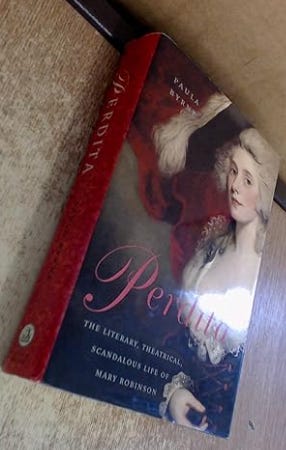
Perdita: The Literate, Theatrical, Scandalous Life of Mary Robinson by Paula Byrne
More portraits by Gainsborough can be see at the Frick:
Gainsborough: The Fashion of Portraiture Frick Website
But the theme of spring flowers and the impact that flowers and art can have resonated with me still. This month, Margaret Emory and I took in a different exhibit at the Metropolitan Museum of art. This one is centered on a stunning new acquisition, a stained glass piece, Garden Landscape, 1912. The unnamed women, the “Tiffany Girls,” put together 10,000 pieces of glass for this three-paneled work of art which is even more stunning in person than from the photographs advertising the show.
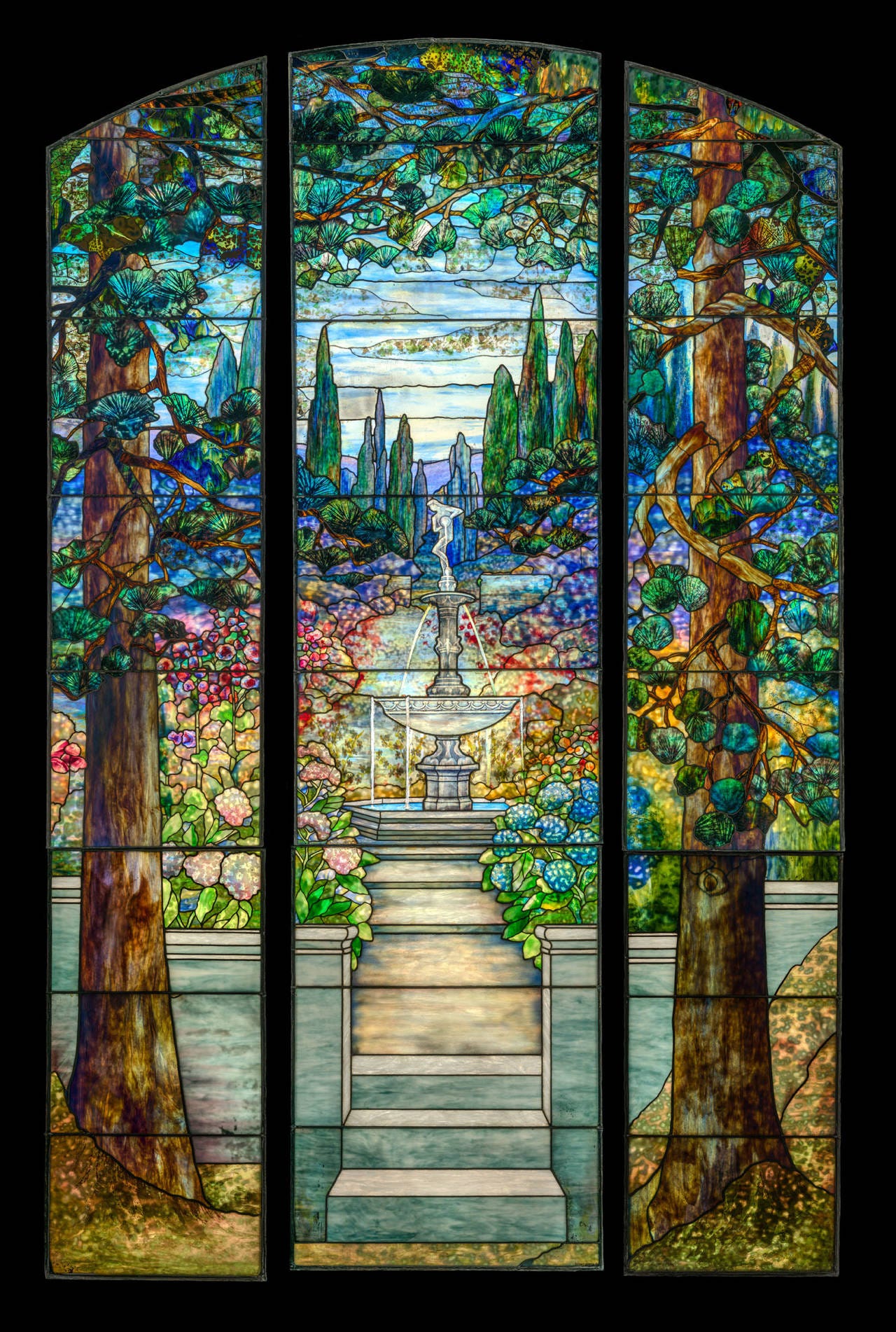
Center Panel of Garden Landscape at the Metropolitan Museum of Art, 1913
You find some of the background on this stunning new artwork here:
Agnes Northrop and the Women of Tiffany Studios
There will be more fires in the iron as the month progresses and I will keep apprised! I have a surprising podcast appearance, an upcoming lecture, some new projects and travels and adventures galore.
Thank you for supporting my work!
Love that you included that Winter's Tale snippet. Perdita's articulating a real anxiety at the time about hybridizing. I always find it interesting that HER character takes that side. thank you!
Leslie Carroll wrote a novel about Mary Robinson entitled ALL FOR LOVE: The Scandalous Life and Times of Royal Mistress Mary Robinson under her pen name Amanda Elyot.