

Grace Pervades
How the Play in London Effects

To Pervade: to become diffused throughout every part of.
Actor Ellen Terry’s reputation was not “soiled” when she married a forty-six-year-old painter, the famous G.F. Watts, when she was only sixteen. It was soiled when that marriage collapsed after ten months and she went to live with her lover out of wedlock for six years. Later, when she was the highest paid woman in England, her sinful past was referenced by critic Charles Reade in a stage review as: “Grace pervades the hussy.”
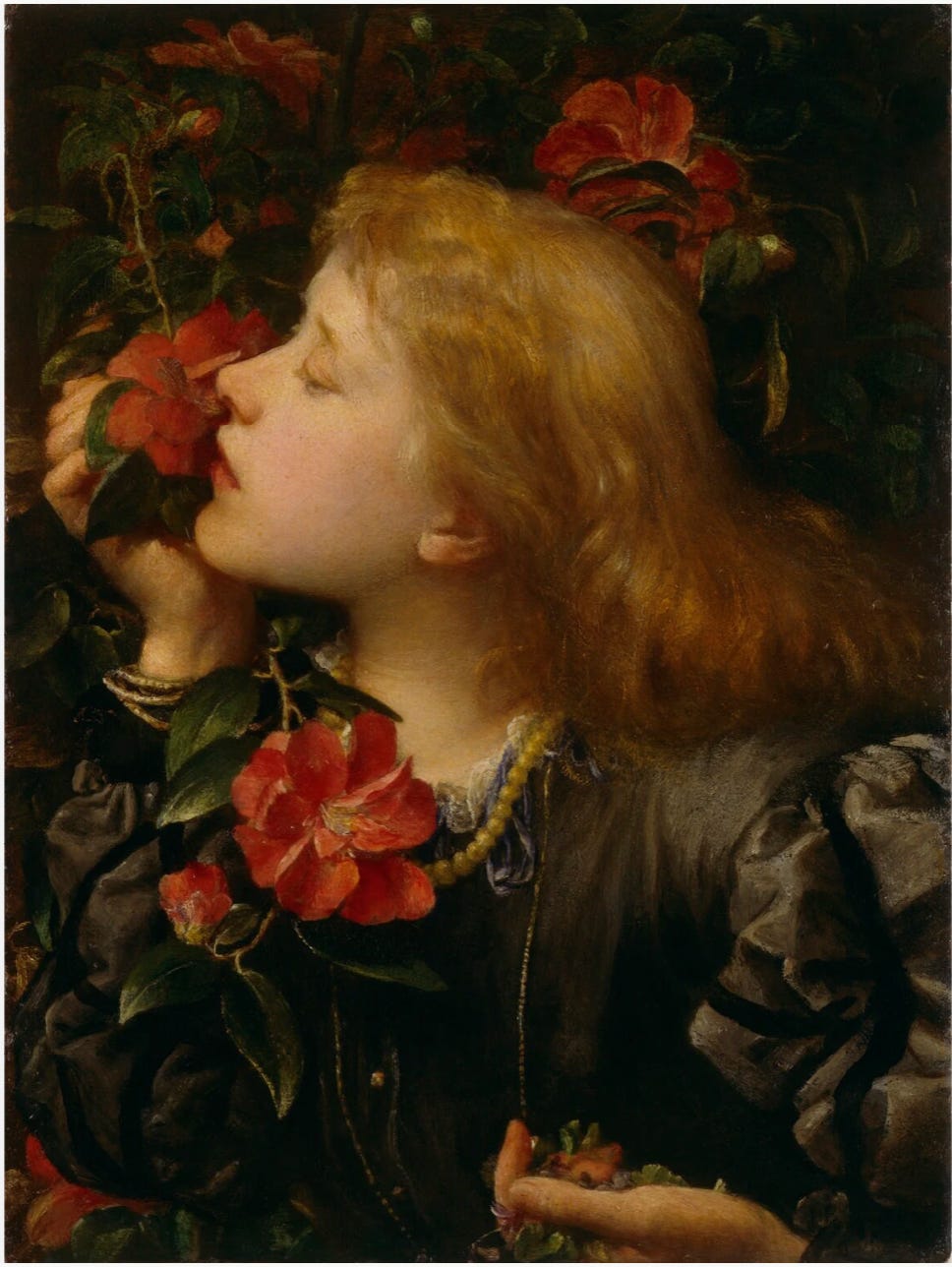
Ellen Terry in “Choosing,” painted by her husband, George Frederick Watts, 1864
After ten months of a stultifying marriage, the “hussy” lived for six years out of wedlock with architect Edward William Godwin and sired two illegitimate children with him. Goodwin eventually left her for nineteen-year-old student, deserting her and her children. Despite this ill-treatment, Ellen was still known for her “grace of spirit as well as of body, it is the essence of her irresistible loveliness.” Minx. Hussy. Actress.
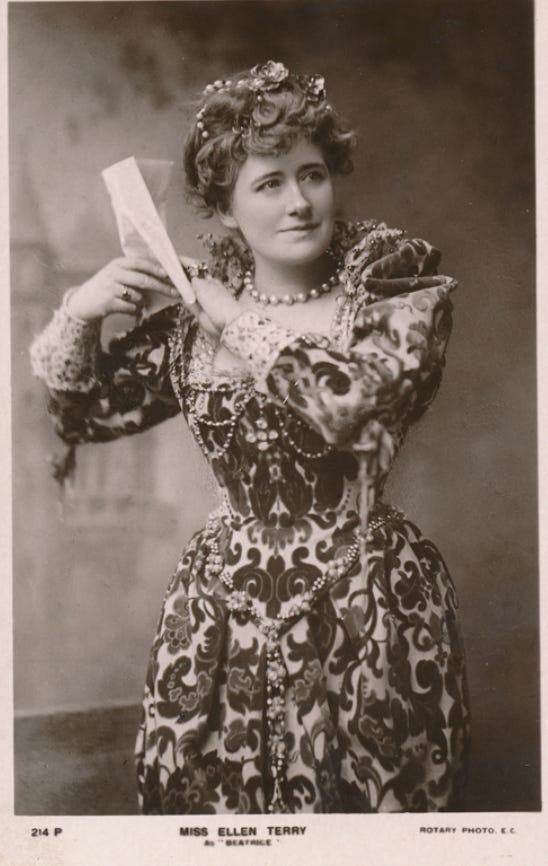
Ellen Terry as Beatrice in “Much Ado About Nothing” with the Lyceum Theatre
The first actor to be knighted, Sir Henry Irving, also had a bad first marriage. In a carriage with his wife coming home from his first real stage success, she asked him when he was going to grow up and give up the theatre. He got out of the cab and never talked to her again. But they didn’t divorce. Divorced men aren’t knighted. In person this artistic visionary had the vibe of a dour deacon. Irving was passionate, articulate, charming, brilliant but frosty. His speciality was either demon or angel.
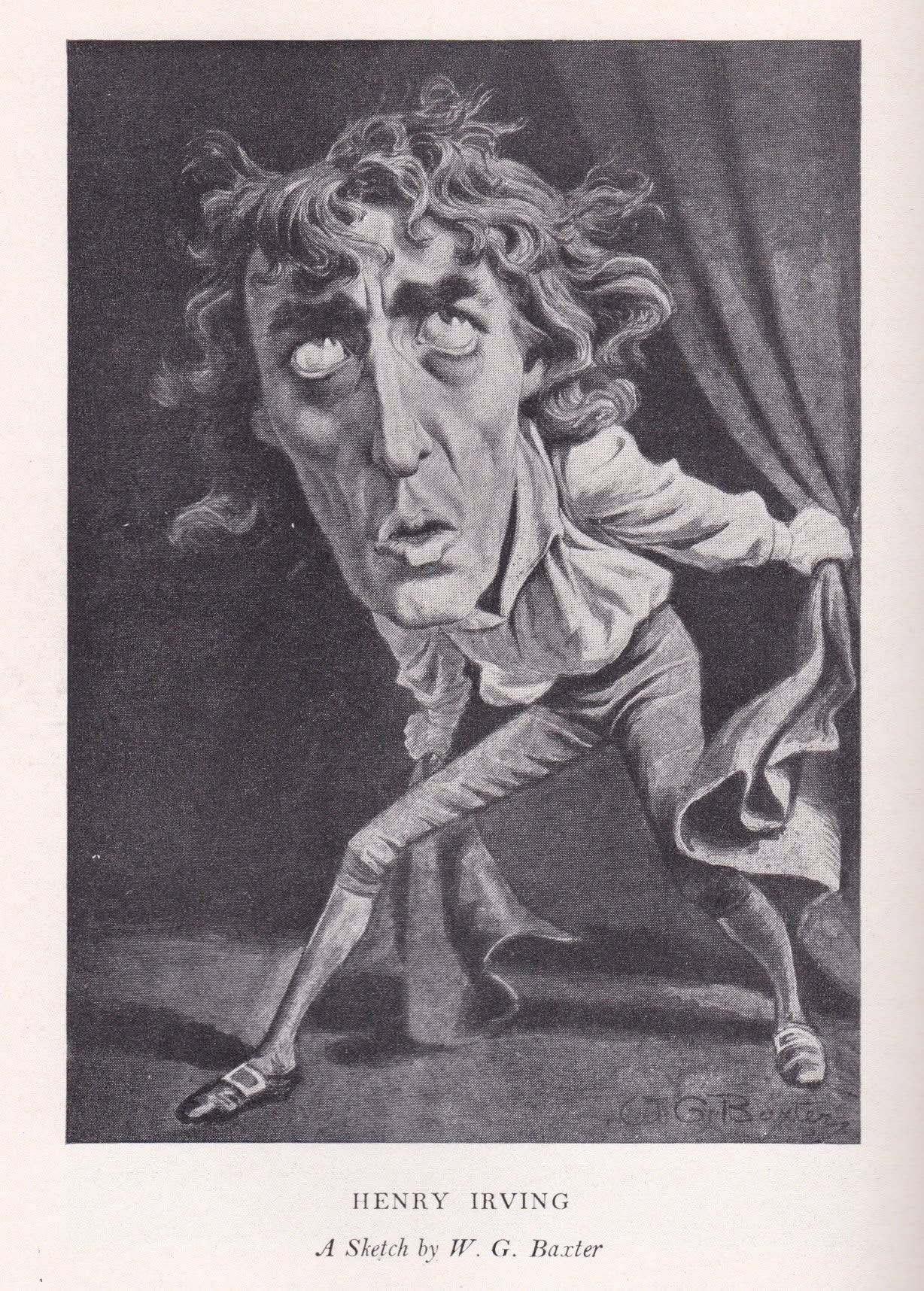
Henry Irving as Hamlet, caricatured by W.G. Baxter
And while Irving had a strange speech pattern, skinny legs and a declamatory manner to his acting, he was charismatic and won over the critics. Most of the time.
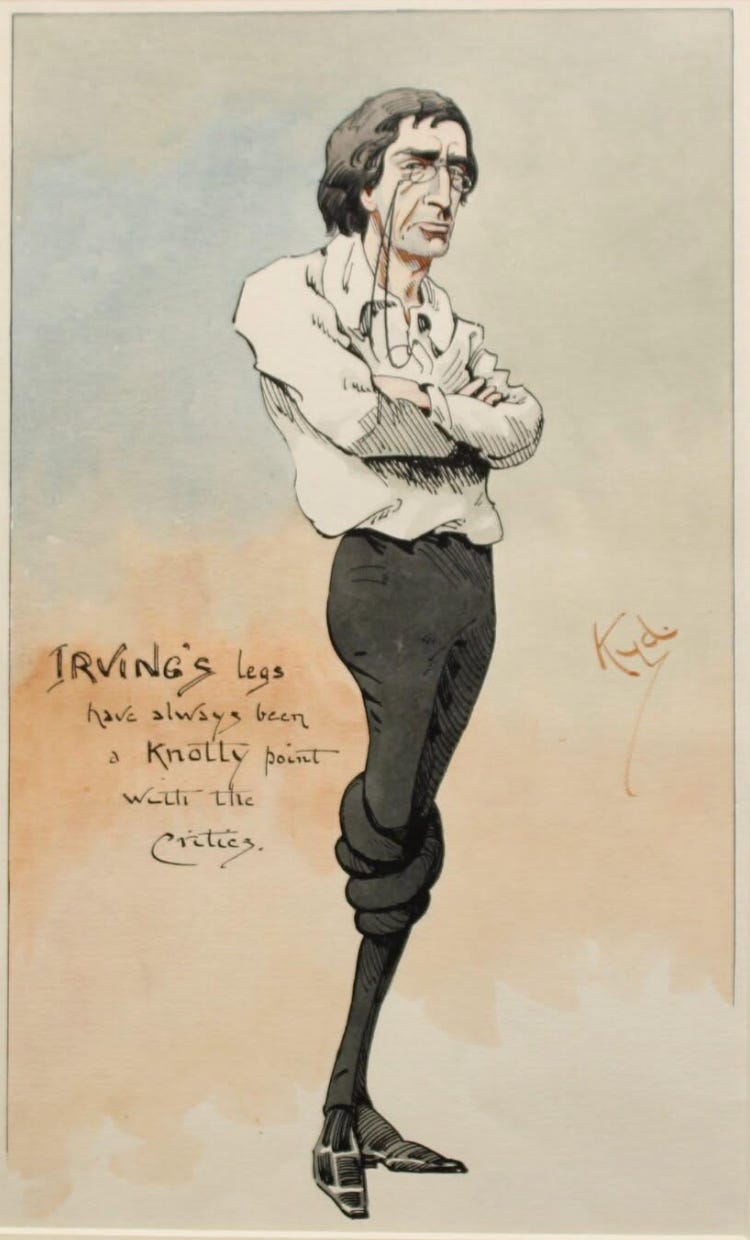
The London newspaper reviewers loved to dig at Henry Irving’s skinny legs. In this caricature, artist Kyd wrote: “Irving’s legs have always been a knotty problem with the critics.”
Irving’s story interested me but it was the chemistry with his onstage partner of twenty-seven years, Ellen Terry, that captivated me. For over a decade, I have been researching Henry and Ellen for my Arcana Oracle Series. I studied both actors’ lives, the celebrity superstars Actor/Producers of the Late Victorian/early Edwardian Age with a fevered following.
When it was announced that Ralph Fiennes would be playing Henry Irving in a new play by David Hare at the Theatre Royal Haymarket, I bought tickets for the show months ahead of time, even though I had no plane tickets to fly to London.
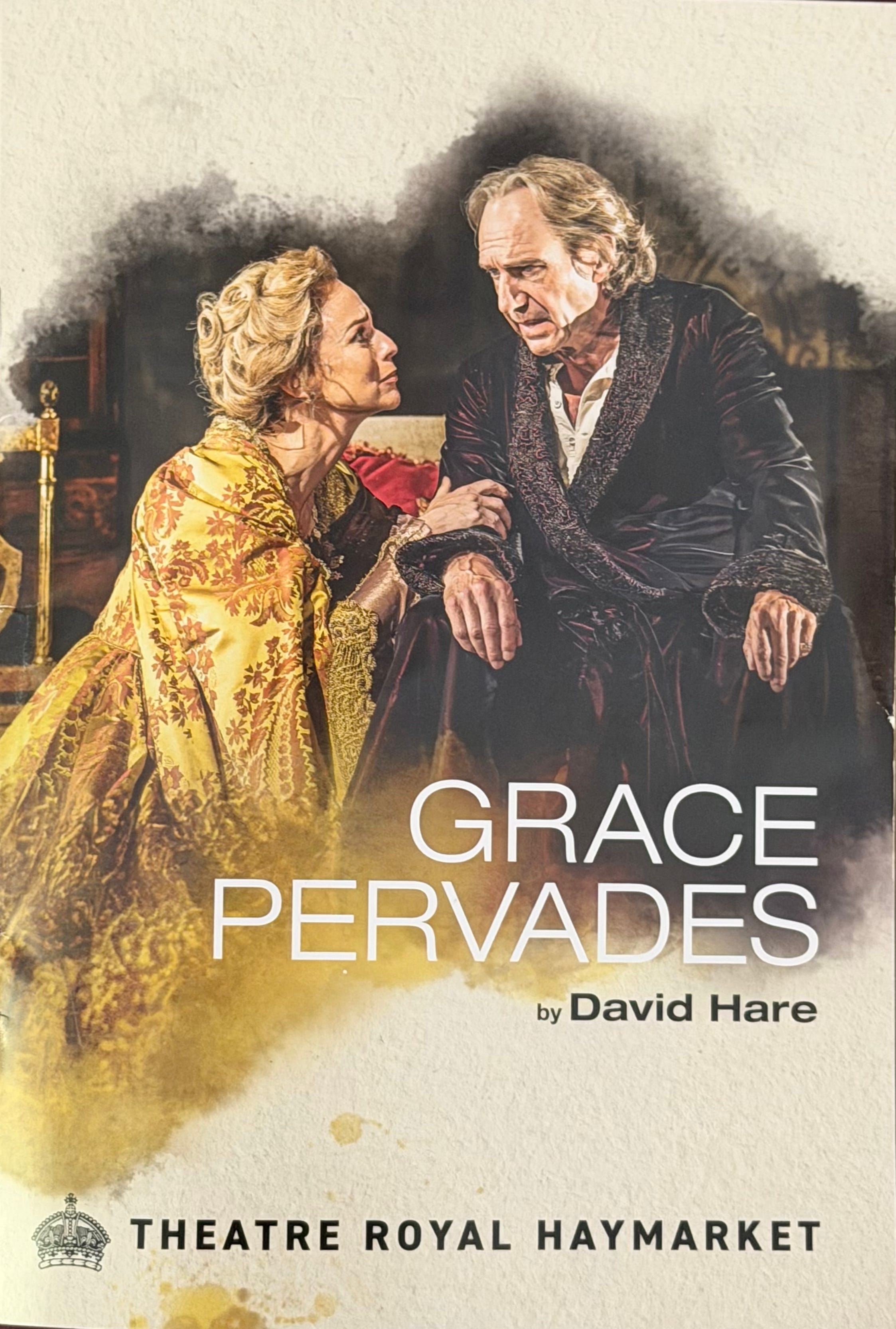
Miranda Raison as Ellen Terry and Ralph Fiennes as Henry Irving in Grace Pervades at the Theatre Royal Haymarket, June 2026
As the first celebrity super-couple, endless images of Ellen and Henry appeared in newspapers, photographs, portraits, drawings, and adverts for cigarettes, face cream and tea. Biographies by Bram Stoker, Jeffrey Richards and Laurence Irving, along with the definitive life stories by Michael Holroyd, made me familiar with most of the lore of the beginnings of the Lyceum Theatre. Patronage by Queen Victoria, Prince Albert, Oscar Wilde and the who’s who of society put the theatre’s reputation on the map.
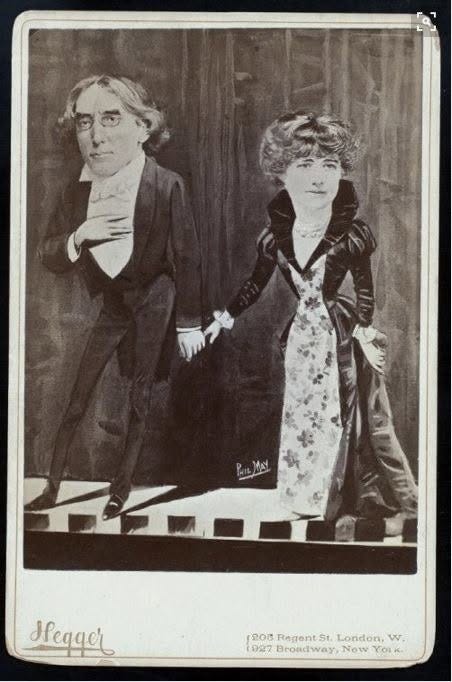
A NYC illustration of Henry Irving and Ellen Terry taking a curtain call before the limelight
Grace Pervades takes on the story of Henry starting the Lyceum Theatre in 1878 and hiring Ellen to come on board as his leading lady. She had already been forgiven by the theatre public (“only 16 when she was married to the ancient mariner”) and her acceptance as a single mother was tolerated because she was graceful. Light. Articulate. As a NY Times article describer her: “her Portia, “illustrating every mood with an irresistible grace and a most spontaneous ease.” Grace, spontaneity, ease they are one and inseparable in Ellen Terry. The first is the greatest because it is the sum of all three.”
The play shows the flaws in the people behind the fame, the missed connections and self motives when people are let down. Several of the scenes I knew exactly what happened in real life, or in the time line of what happened and it was initially jarring as my writer brain went, “No, the dog was in the drawing room the whole time,” or “wait, Ellen’s daughter, Edy, wasn’t at that performance” but soon I was able to shush my busy brain.
David Hare brought up the idea of grace. In theological terms, "grace" means that someone (typically God) gives some person some the benefit which he or she didn't deserve. So Christian forgiveness is grace, a “not quite hitting the mark” Victorian definition of Grace Pervades. Or, it could be that the lightness and non-judgment is grace.
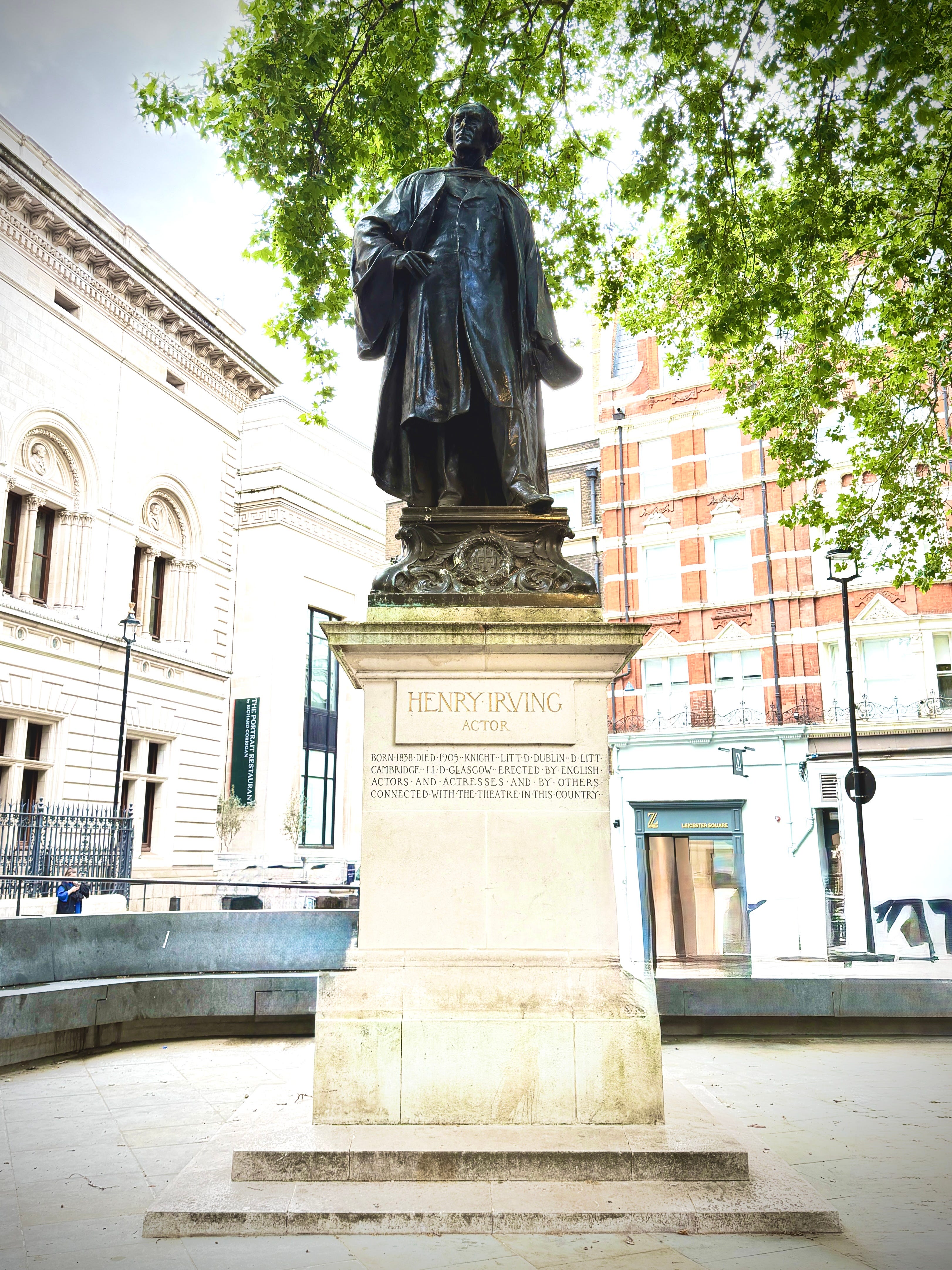
For all of the fame, money, titles and grace that both Henry Irving and Ellen Terry experienced, they are mostly forgotten nowadays. Modern audiences, and certainly younger audiences, have no idea who they were, even with Sir Henry Irving’s statue outside the National Portrait Gallery in London. I was very touched by the play and was very effected by the ideas of sacrifice, selfishness and grace as love. I would love to see it again.
I was gifted a portrait of Ellen Terry by Pamela Colman Smith by Nikki Sanders. Nikki’s grandmother, Rosalie Baillie, was good friends with Pamela and inherited some of Pamela’s artwork. Not any of the tarot templates from the Waite Smith tarot deck she co-created but, theatre renderings.
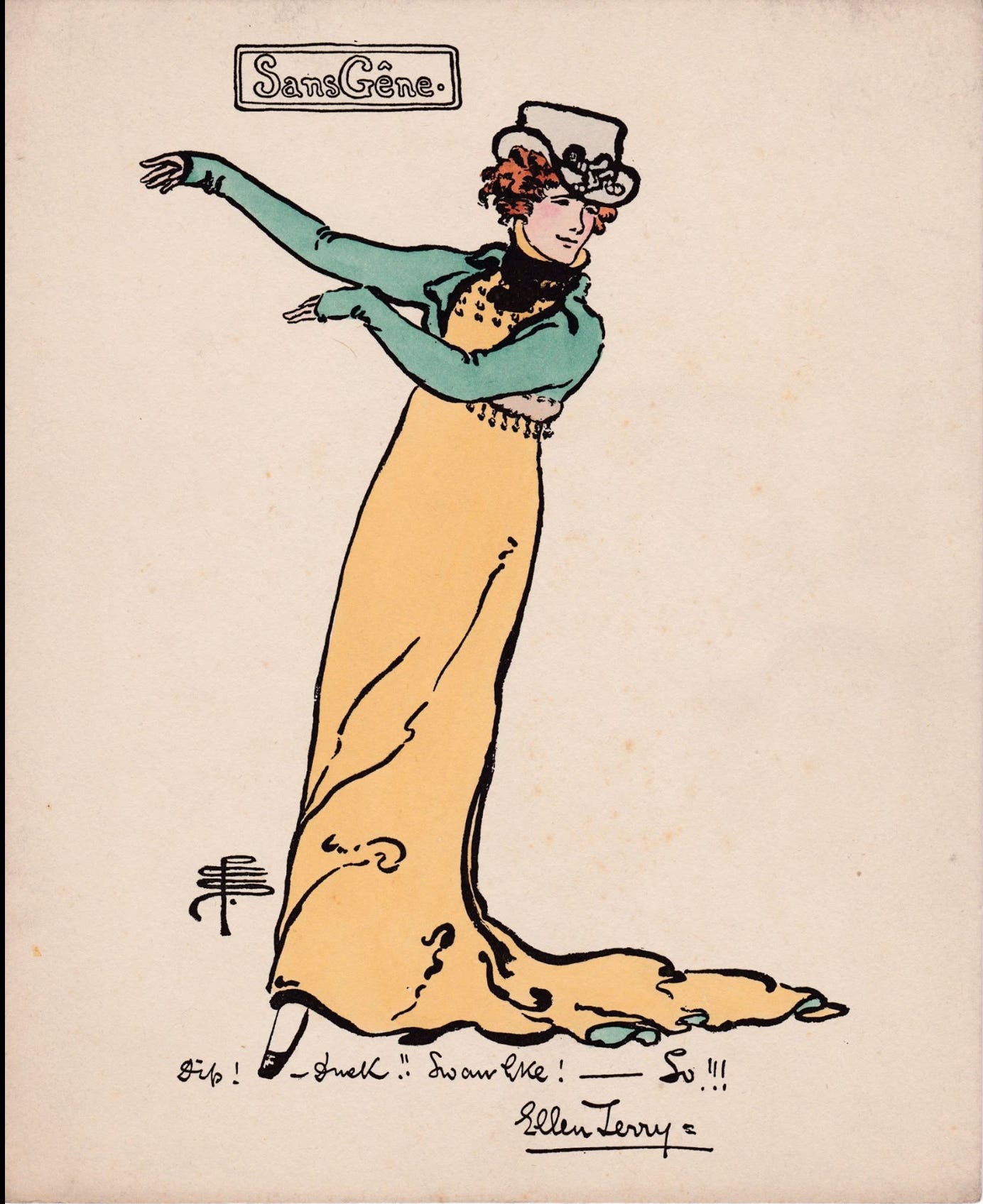
Ellen Terry as Madame San Gêne in the Lyceum Theatre production by Pamela Colman Smith
This artwork of Ellen from a production of Madame Sans-Gêne is inscribed with dancing instructions in the script. Playing a former washer woman who is now a duchess, Ellen’s character takes dancing lessons so she might be prepared to entertain Napoleon.
The dancing instructions from the play are as follows: ‘Dip, Dwell, Swan Like - So!’
In this play that Ellen commissioned and produced through the Lyceum Theatre, the NY Times wrote: ““Madame Sans-Gêne” remains one of the delightful and blooming pieces of the theatre. It has verve and a hearty spirit; it has wits about it and a breeze of inexhaustible life.”
The dancing lesson instructions were quoted several times in reviews of the show and point out that even in this comedy, the aspect Madam Sans-Gêne was striving for was one of grace.
Grace truly did pervade.
Thank you for supporting my work and if you are interested in the relationship of Dame Ellen Terry, Sir Henry Irving and Pamela Colman Smith, the second book in my Arcana Oracle Series, High Priestess and Empress, follows their adventures.
You've given me a new understanding of the play's title, the idea of giving others grace despite their flaws and limitations. Both Terry and Irving made mistakes in their lives, but they adored great drama, gave their all to their audiences, and, I believe, loved each other deeply even though they grew apart. I'm sending your piece to my friends who saw the play with me
I was looking to see when you would review, Susan, and loved all your wrote. Almost as good as being there. I hope it is either filmed or they bring it to NYC. Thanks so much!